Typography is your most underused design weapon.
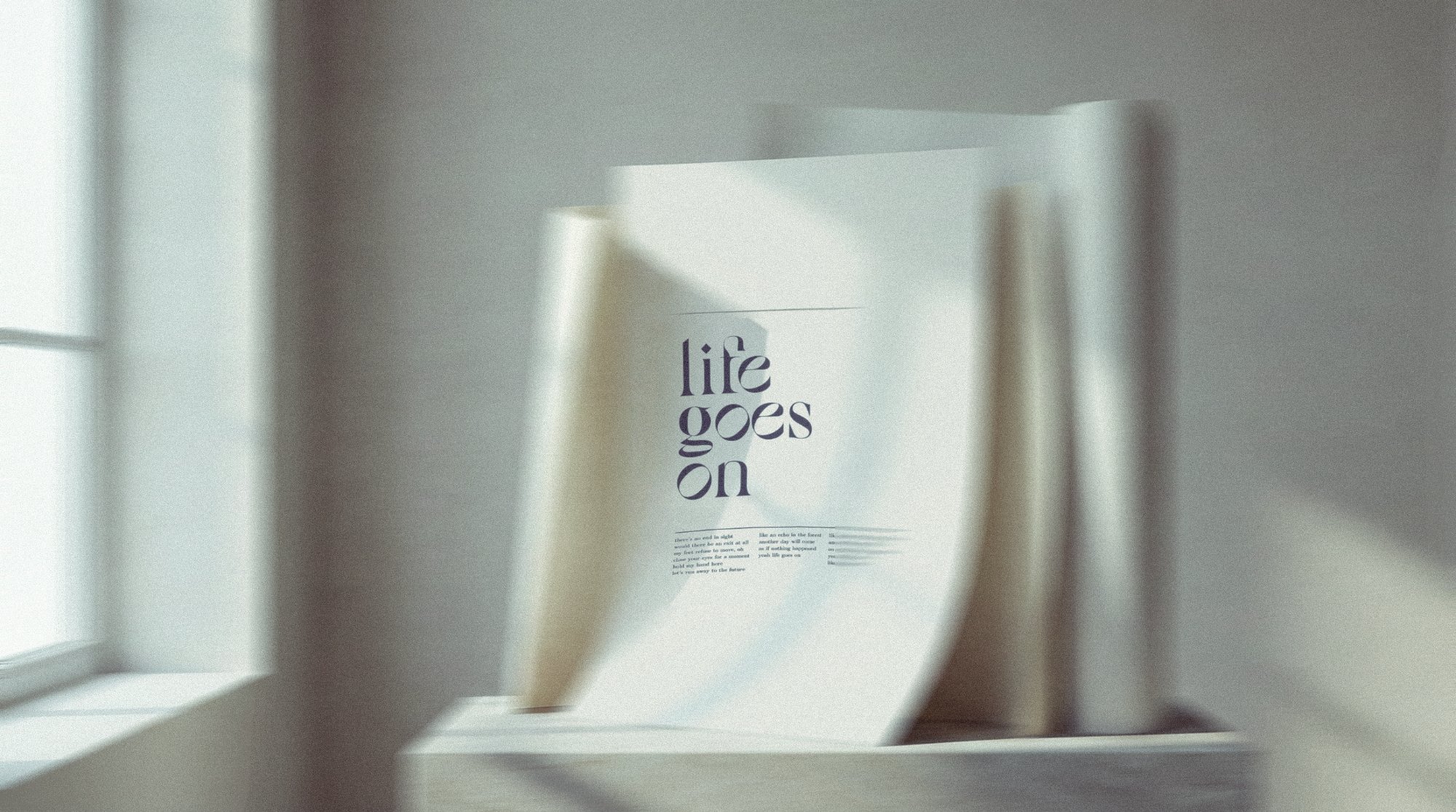
Typography is the first thing people read and the last thing most designers think about.
And I can tell. I can always tell.
Lines that run 120 characters wide when they should stop at 80. Sentences ending on an “of” or an “and”, lines that end without meaning. Widows hanging at the bottom of a paragraph like someone just gave up. And the font pairing. God, the font pairing.
Matching two typefaces is one of the hardest things in design. You need to match the x-height, the contrast, the rhythm, the personality. Pairing two serifs together? Extremely hard. Pairing two sans-serifs? Almost impossible without it looking like a mistake. And yet people do it every day like they’re picking socks.
I treat typography as my primary design tool. Before color. Before layout. Before anything visual, I build the type system. Which face for display? Which for body? How do they talk to each other? What’s the scale? What’s the rhythm?
Let me give you an example.
I designed a book for Steve Hodel, a retired LAPD homicide detective, New York Times bestselling author. The Black Dahlia Avenger series. For that project, I studied Man Ray’s portraits and the typefaces used to describe surrealism in that era. I ended up using Caslon, and the typographic variation, the scale, the weight shifts, the layout rhythm, was built from the same proportions Man Ray used in his compositions.
There was imagery, but it was minimal. The type did the storytelling. It set the pace. It controlled how the reader moved through a true crime investigation. Like a cinematographer controlling a frame, except with letterforms.
Here’s another one. A consultant in Sydney. Simple website. We turned it into a sales funnel, and the main lever wasn’t the colors or the graphics. It was typography. His audience was B2B, these people needed to read. When you make reading easier, when the most important ideas are bigger and the eye flow is natural, everything converts better. His sales went up. Not because we added something flashy. Because we made reading feel effortless.
Do I have a go-to font? No. And I’d be suspicious of any designer who does. Bodoni when you need heritage. Baskerville when you need something different entirely. Caslon for Steve Hodel. Futura when you want an early-80s or 90s energy. Helvetica when it needs to feel corporate, but never Helvetica with a Swiss-style layout. That combination makes your work look like everyone else’s. There needs to be some breakage. Some tension.
If you’re still opening a font picker and scrolling until something catches your eye, you’re leaving your most powerful tool on the table.
Typography isn’t decoration. It’s the design.