Case study
SPLT
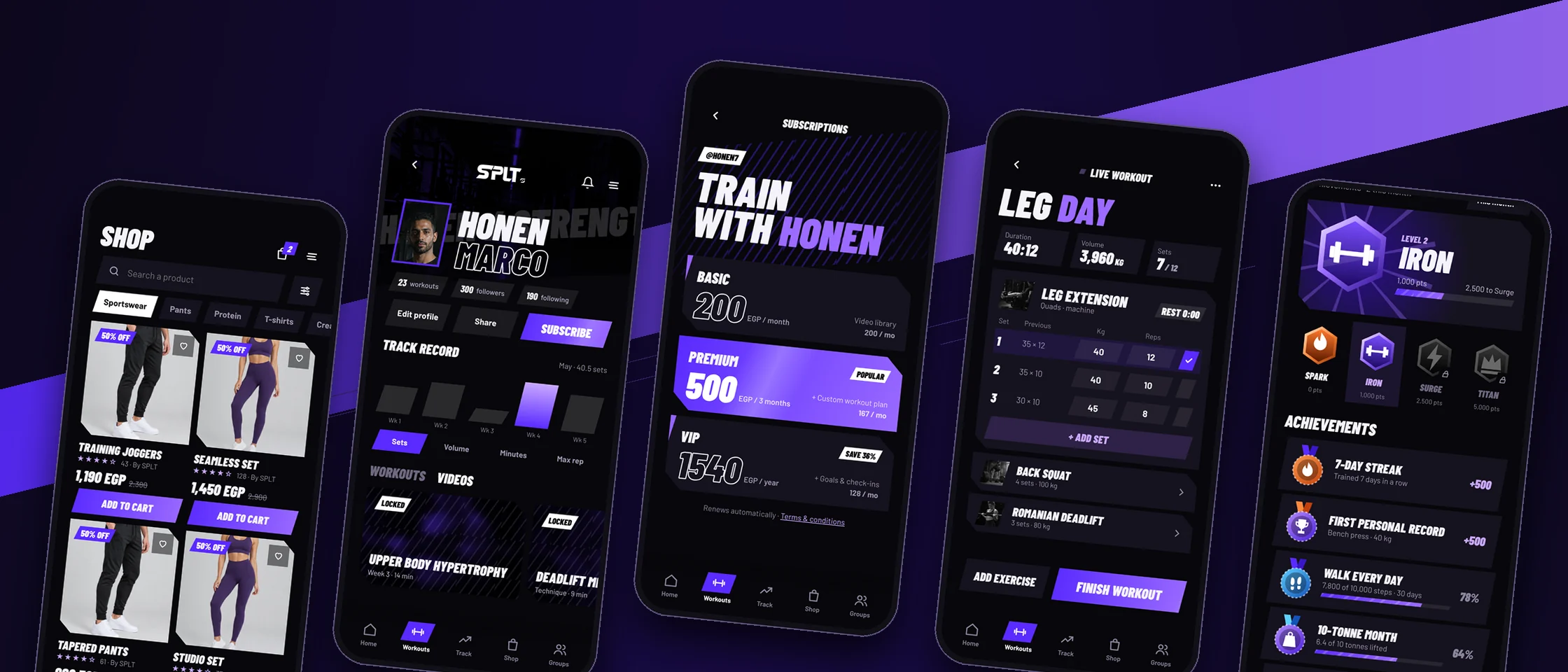
The brief asked for a shop. I proposed a platform built around trainers and their members.
- Client
- SPLT Fitness social app & marketplace, Egypt
- My role
- Creative Director & UX Lead at Overpowered Led 2 designers and the client relationship
- Timeline
- Feb – Jun 2025
- Scope
- Product scope, competitive research, information architecture, mobile app, three dashboards, design system
- Industry
- Health & fitness Marketplace
- Markets
- Egypt (EGP pricing)
Overview
SPLT wanted to be more than a workout logger. The ambition was a fitness community where members could track training, follow one another, buy products from several sellers and connect with trainers.
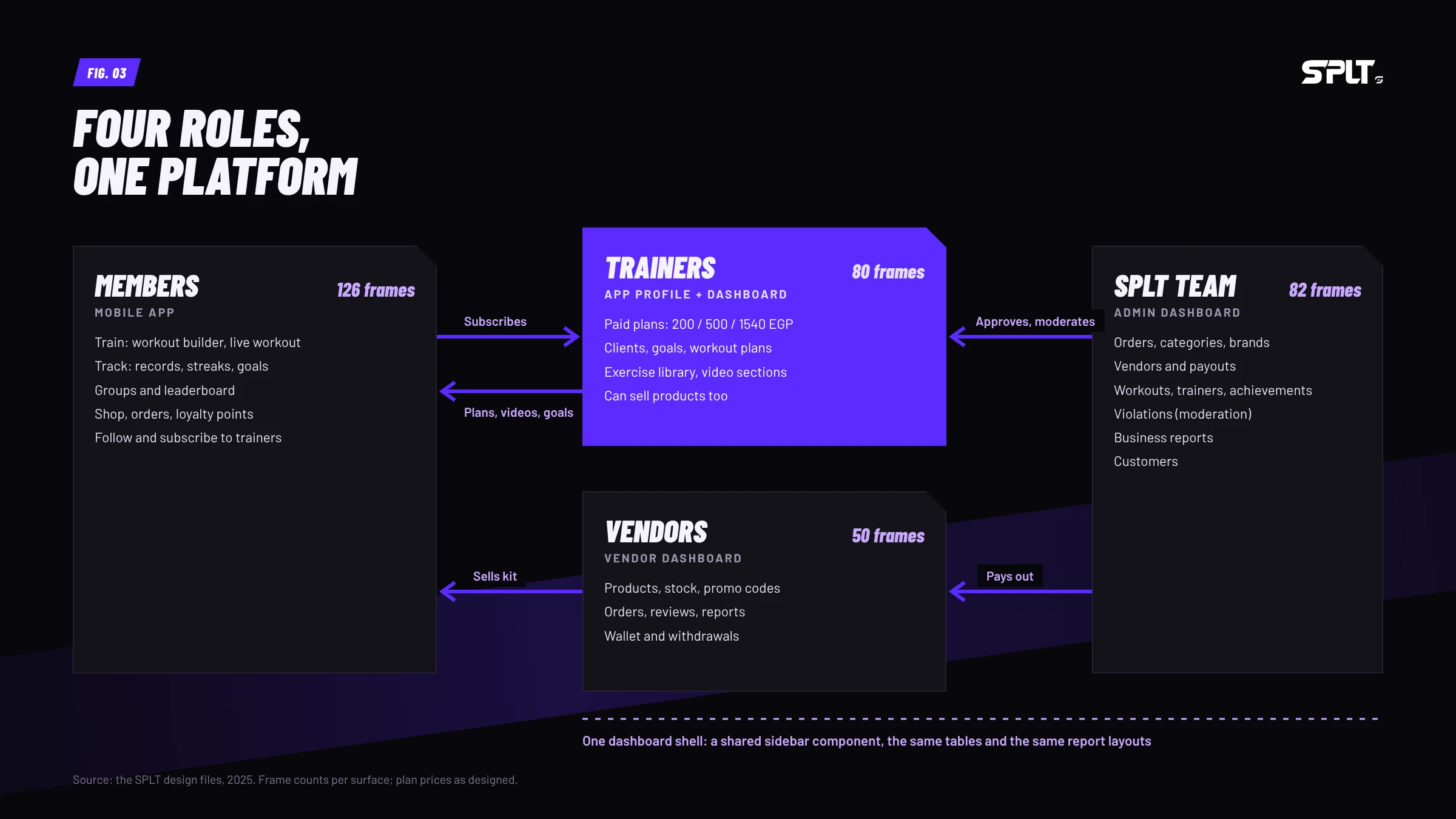
That meant designing for four groups at once: members, trainers, vendors and the SPLT team. Each needed a clear reason to use the product, and the platform needed a business model that could support them all.
Key impact
One platform for members, trainers, gyms and the team running it · A trainer subscription model proposed as a new revenue line
The brief
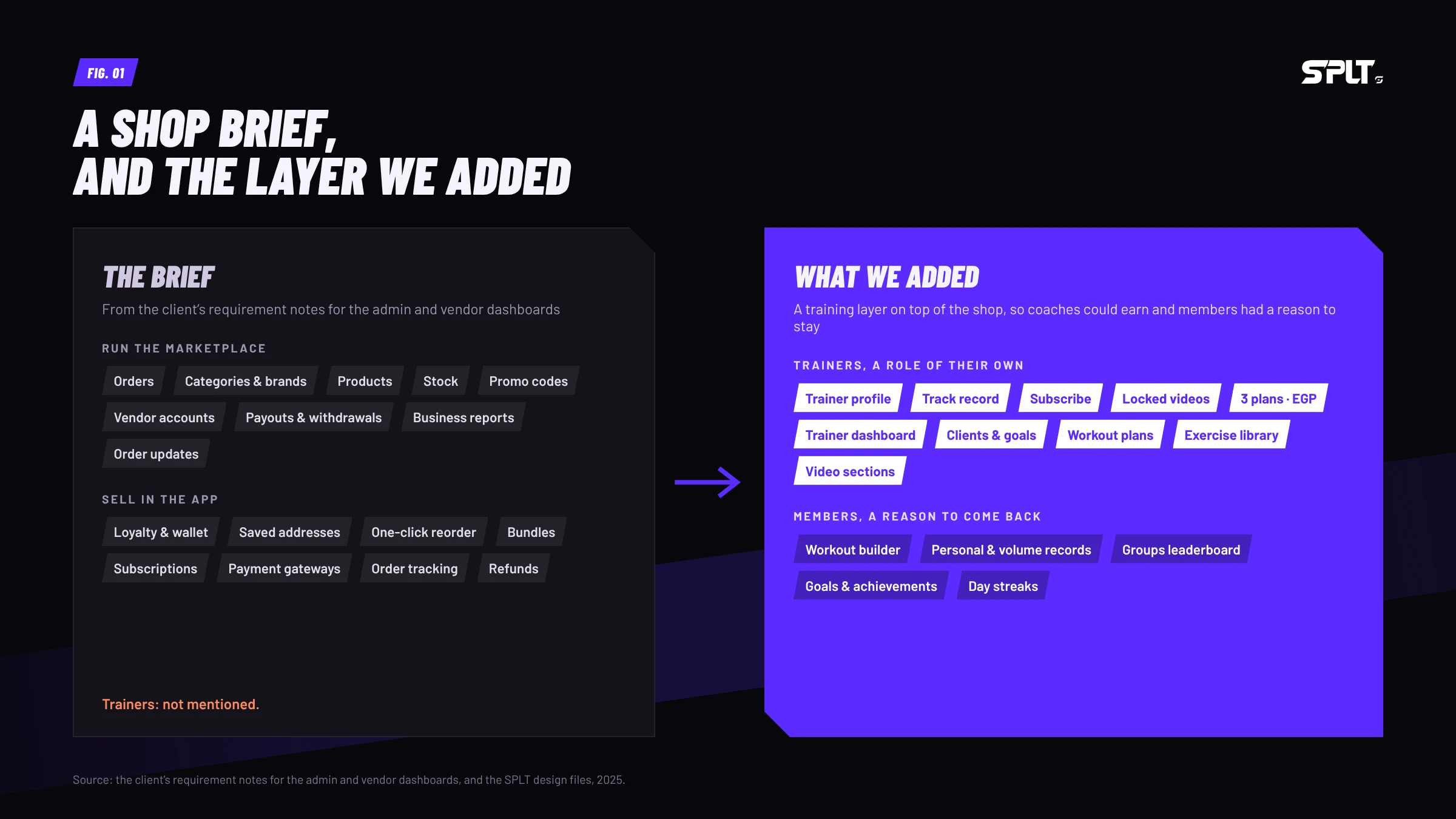
The initial brief focused on commerce: products, orders, stock, promo codes and payouts for admins and vendors, with loyalty points and subscriptions on the shop side. It was built around selling; trainers and members didn’t yet have a role of their own.
The development estimate the client had been given didn’t hold up line by line, and product strategy and design hadn’t been scoped at all.
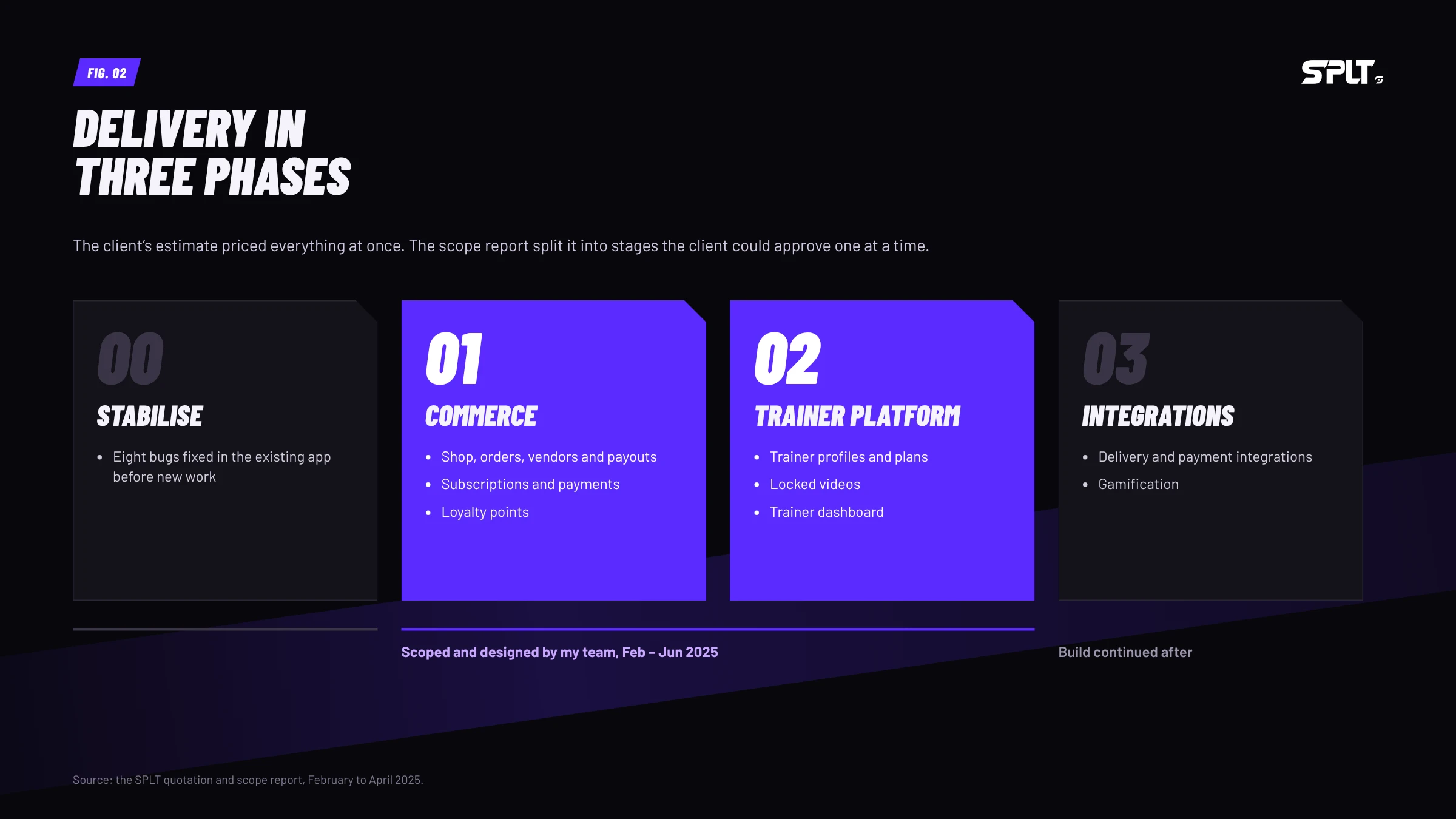
I proposed splitting the work into stages: strategy, feature definition and UX/UI design first, development once the product was defined. The client agreed, and I led the product direction with two designers.
Competitive research
Before drawing wireframes, we subscribed to the major fitness apps and their betas and reviewed their features alongside user feedback.
One gap kept appearing: trainers were treated like ordinary members, with little chance to establish their professional credibility or earn through the platform.
That changed the direction of the product. Rather than treat the marketplace as a shop with a social feed attached, I developed a training layer around the relationship between coaches and members.
Designing for four roles
We expanded the scope to include a comprehensive community and workout architecture, shifting the business model from a transactional shop to a trainer-driven platform.
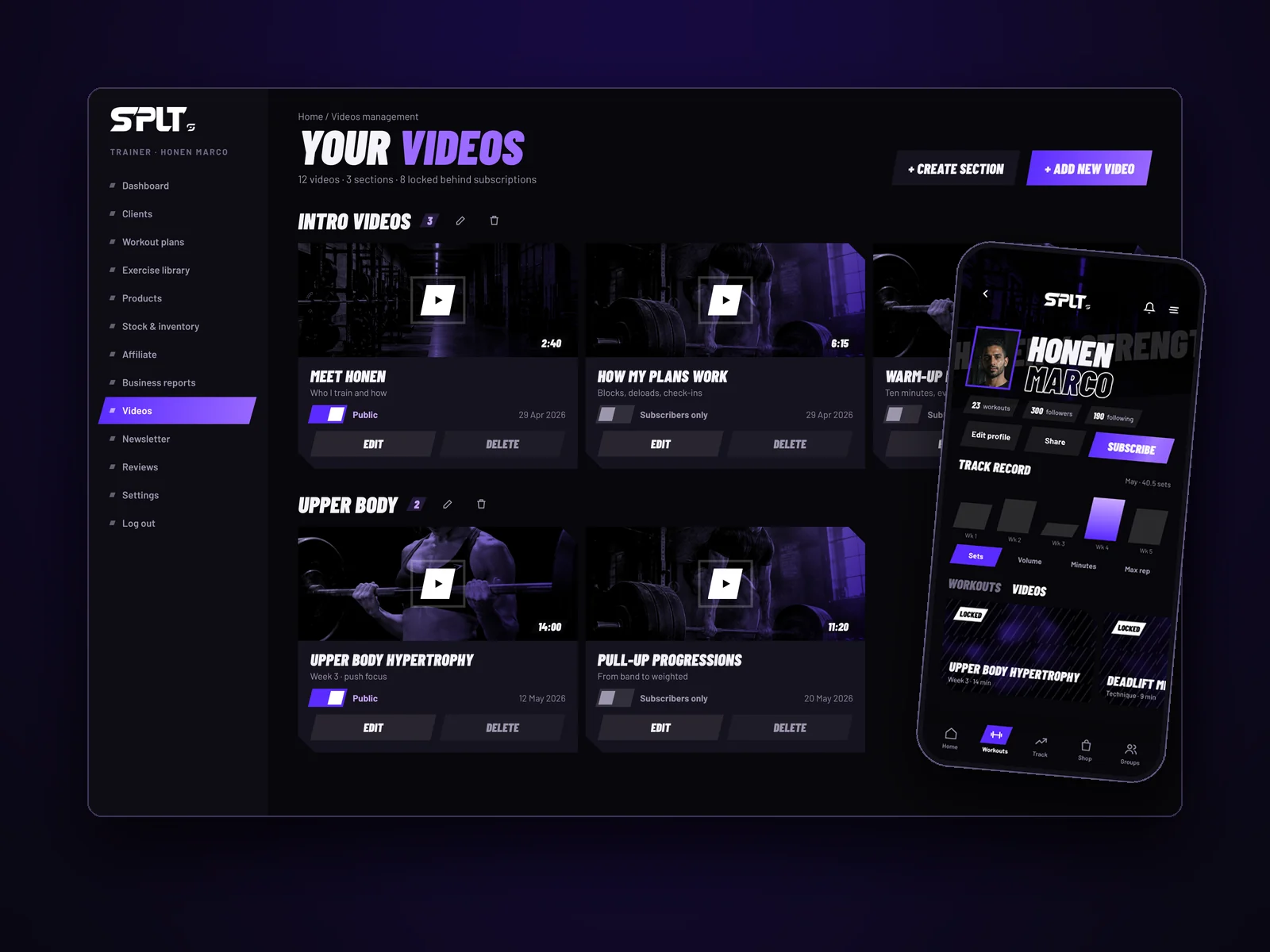
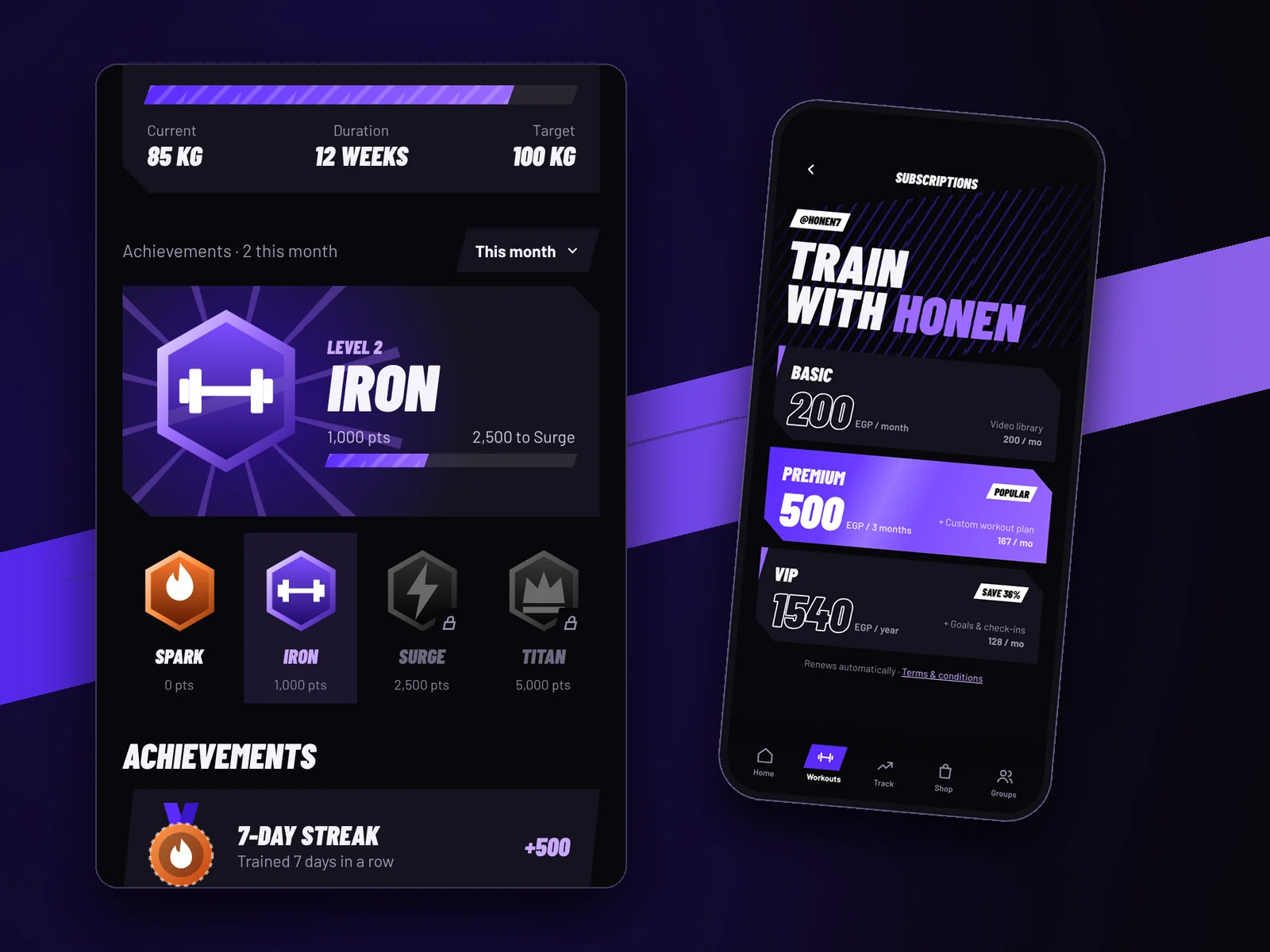
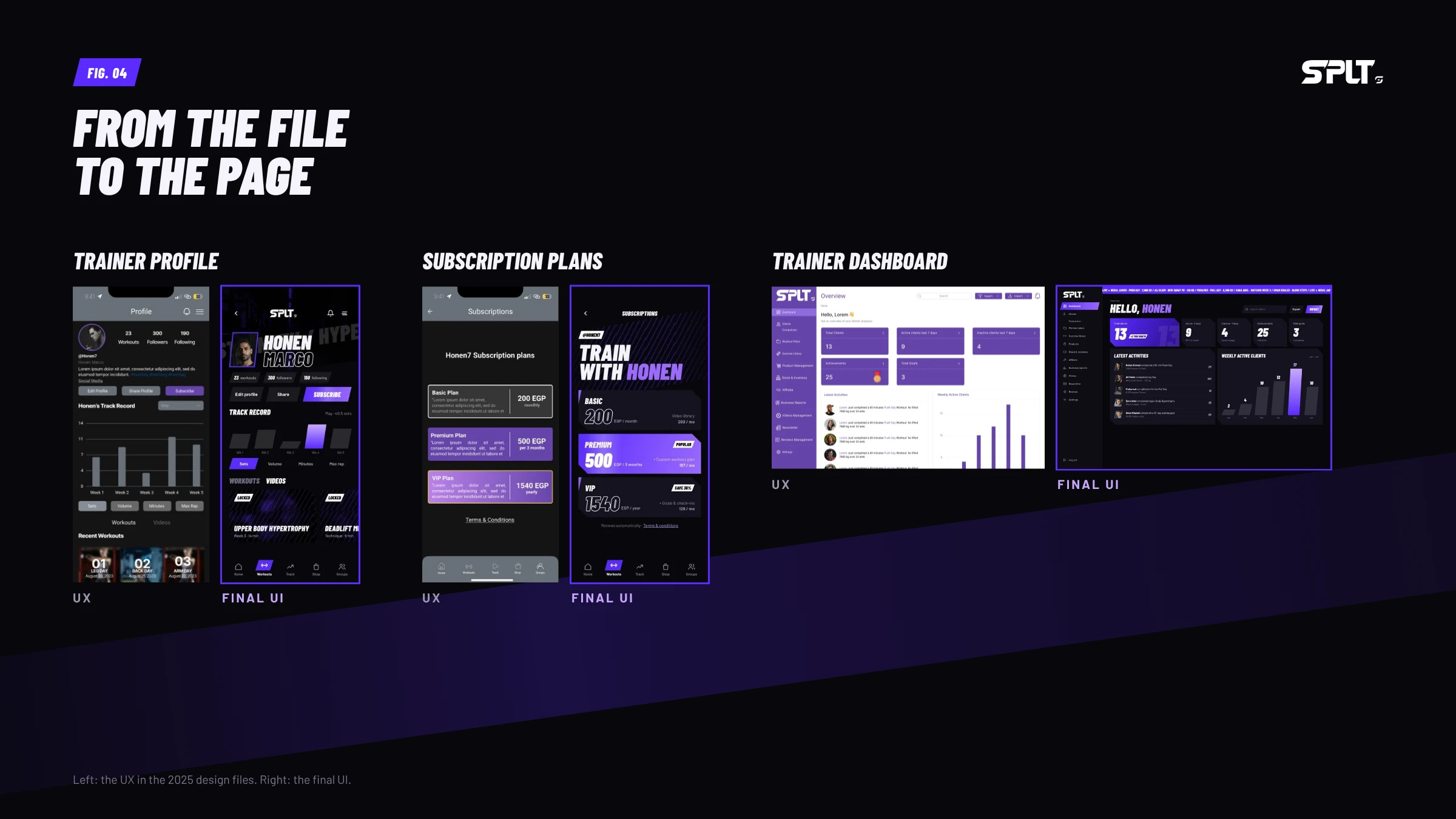
Trainers became a role of their own. Their profiles led with their track record and subscription plans. Free content let members judge a coach before paid videos unlocked the rest, and monthly, quarterly and yearly plans were proposed as a new recurring revenue line.
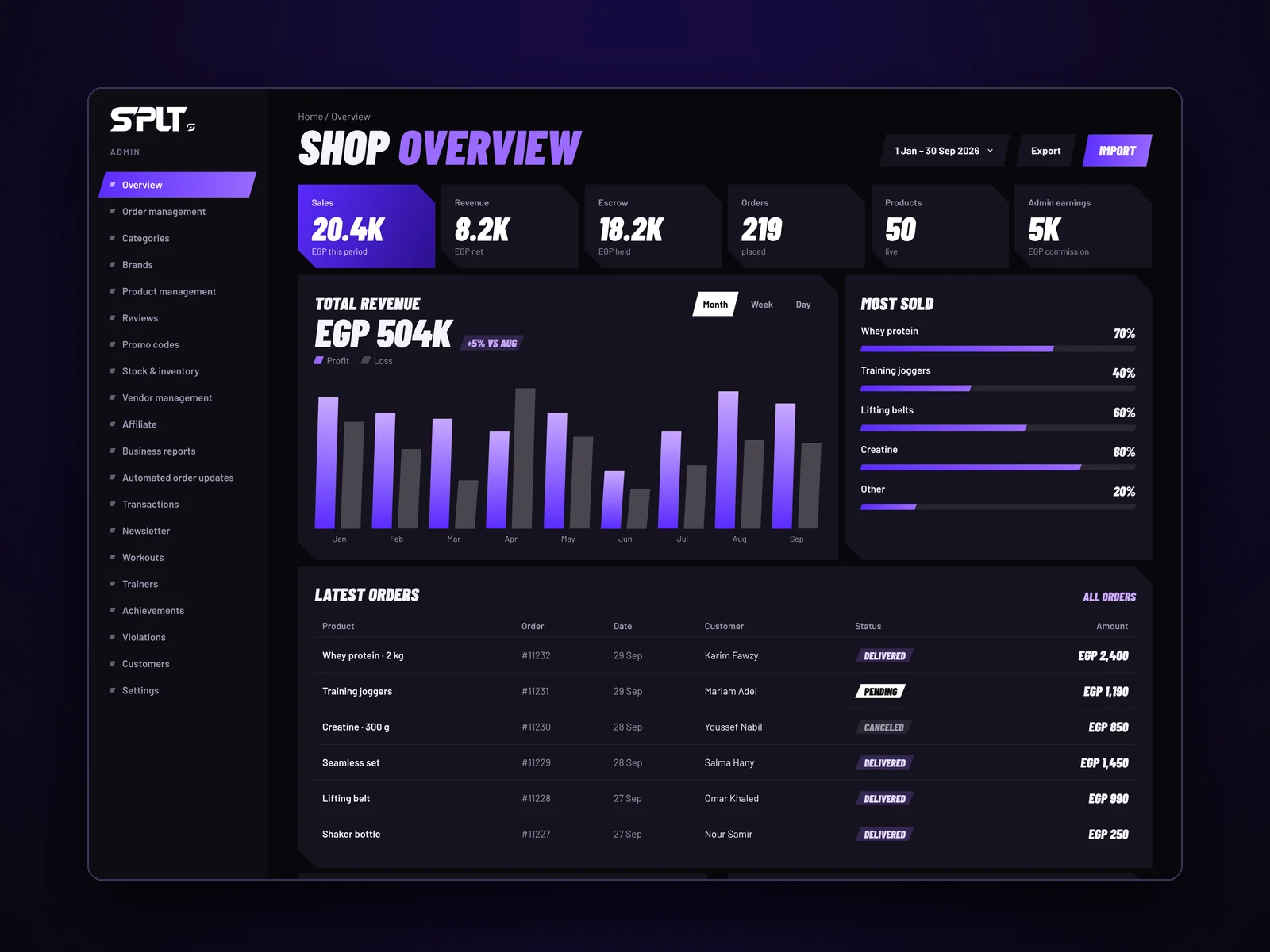
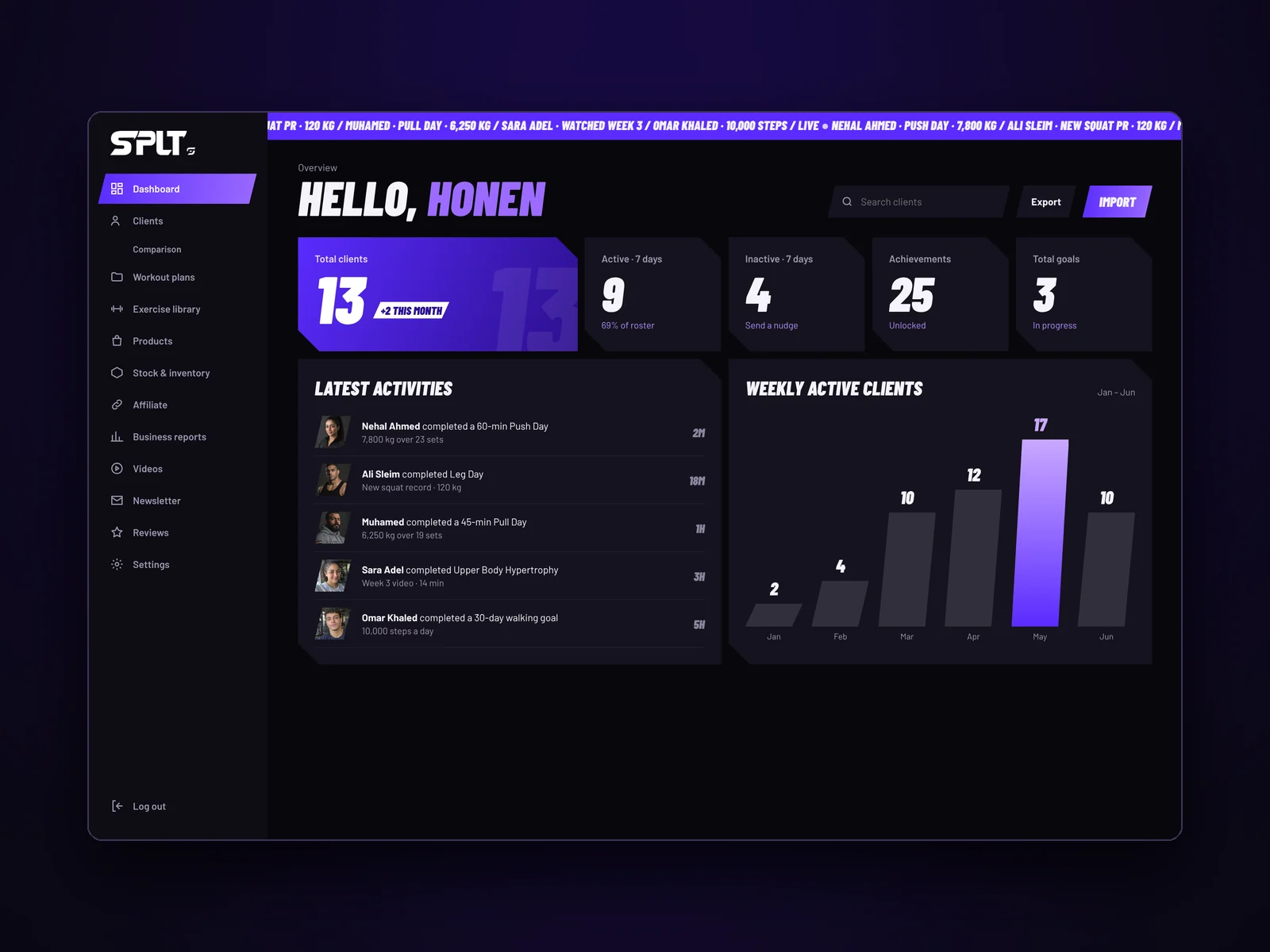
A dedicated trainer dashboard handled clients, goals, workout plans, an exercise library and video content, while vendor and admin dashboards ran the operational side of the marketplace.
The challenge was to give each role the right experience without building four disconnected products.
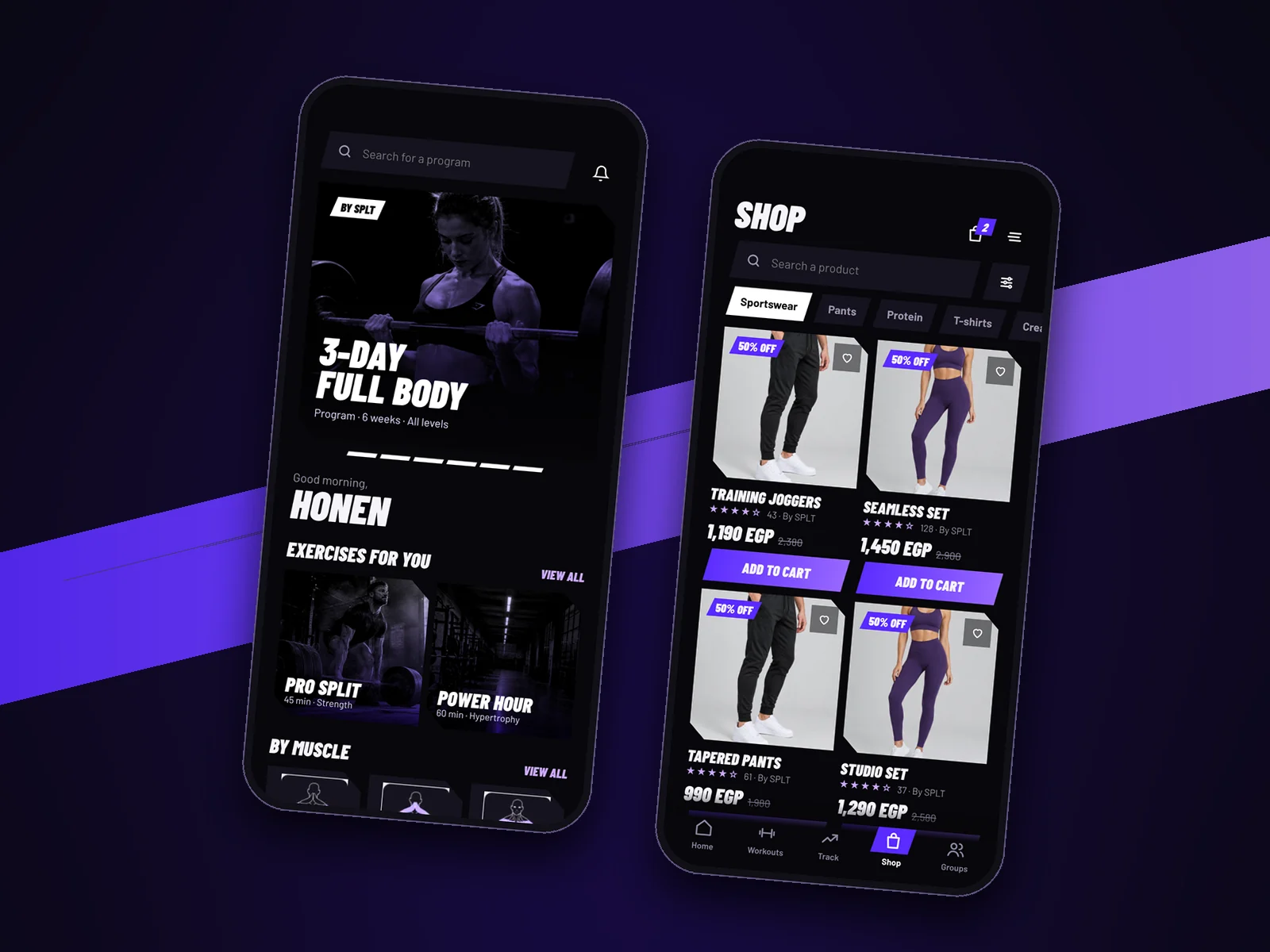
The design system
I set the information architecture and the visual direction, then worked with a senior and a junior designer to build the screens and the shared system. Multi-role admin systems were new territory for the team, so we mapped the user journeys and the logic behind each role together before building the full UI.
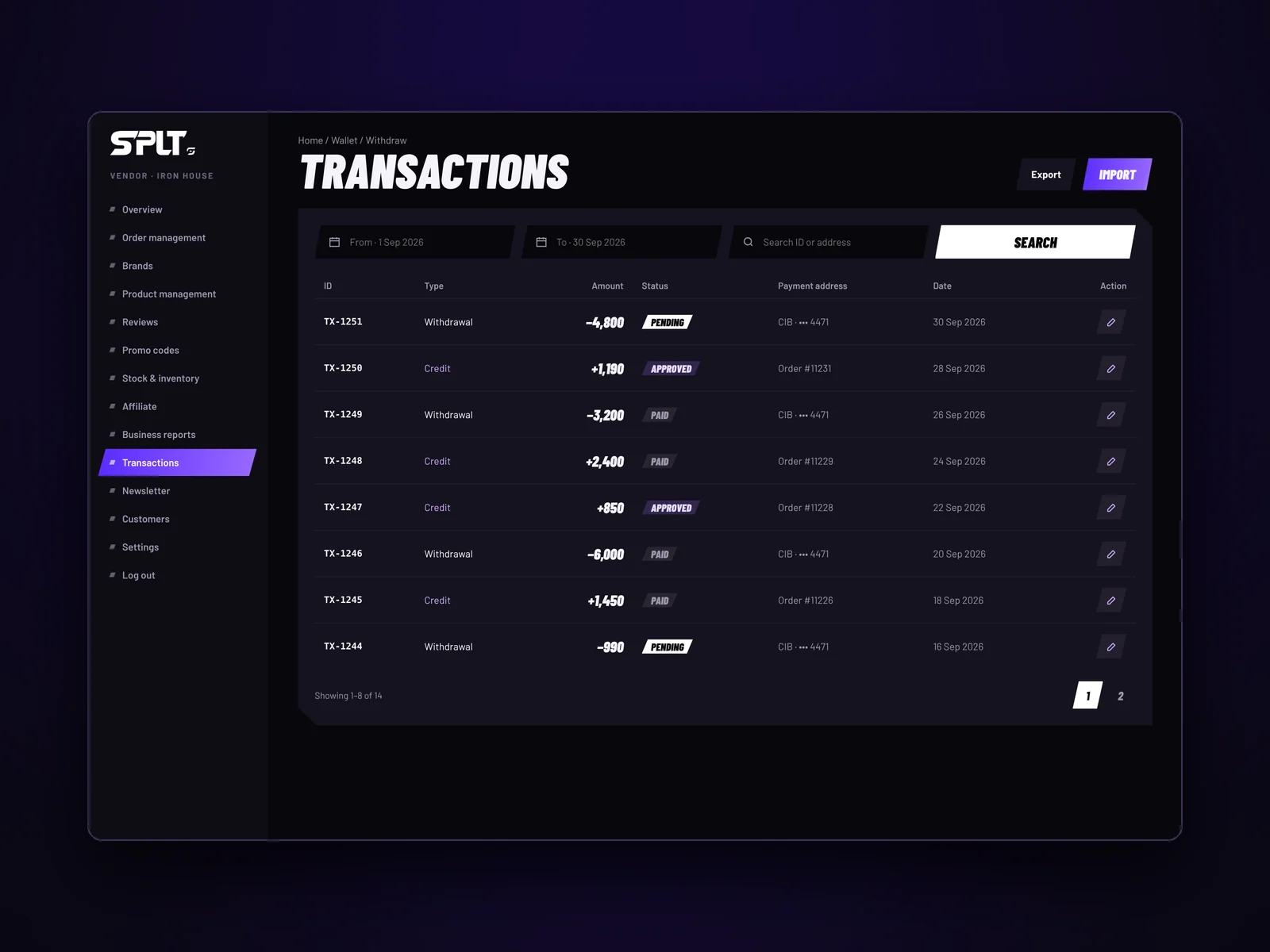
The trainer and admin dashboards each had their own navigation, and all three shared one shell, one set of tables and one set of reporting patterns. The mobile app and the dashboards used the same visual language.
What changed
- Reshaped a commerce-first brief into a staged product engagement
- Added a dedicated trainer role with profiles, paid video and three proposed subscription plans
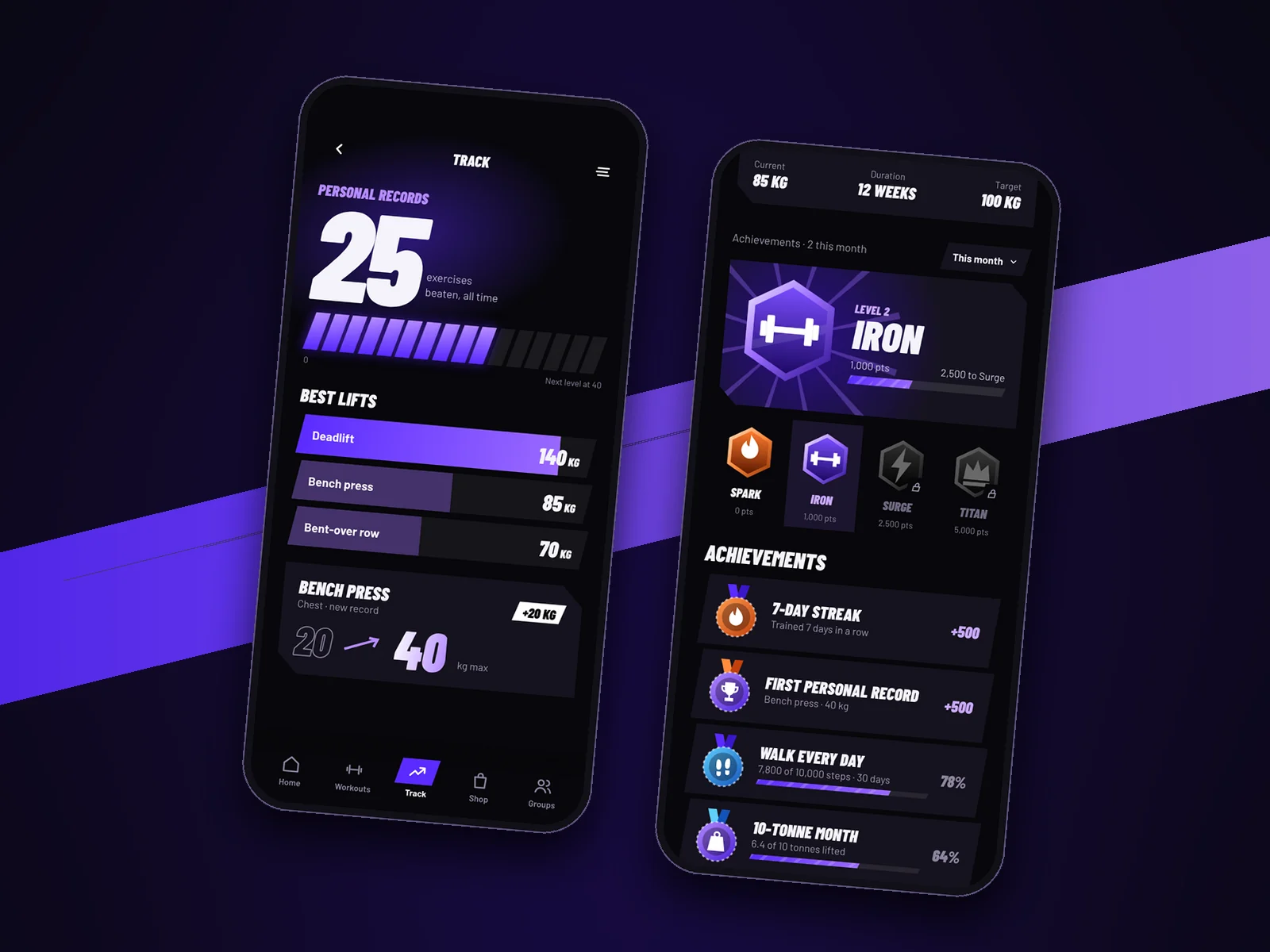
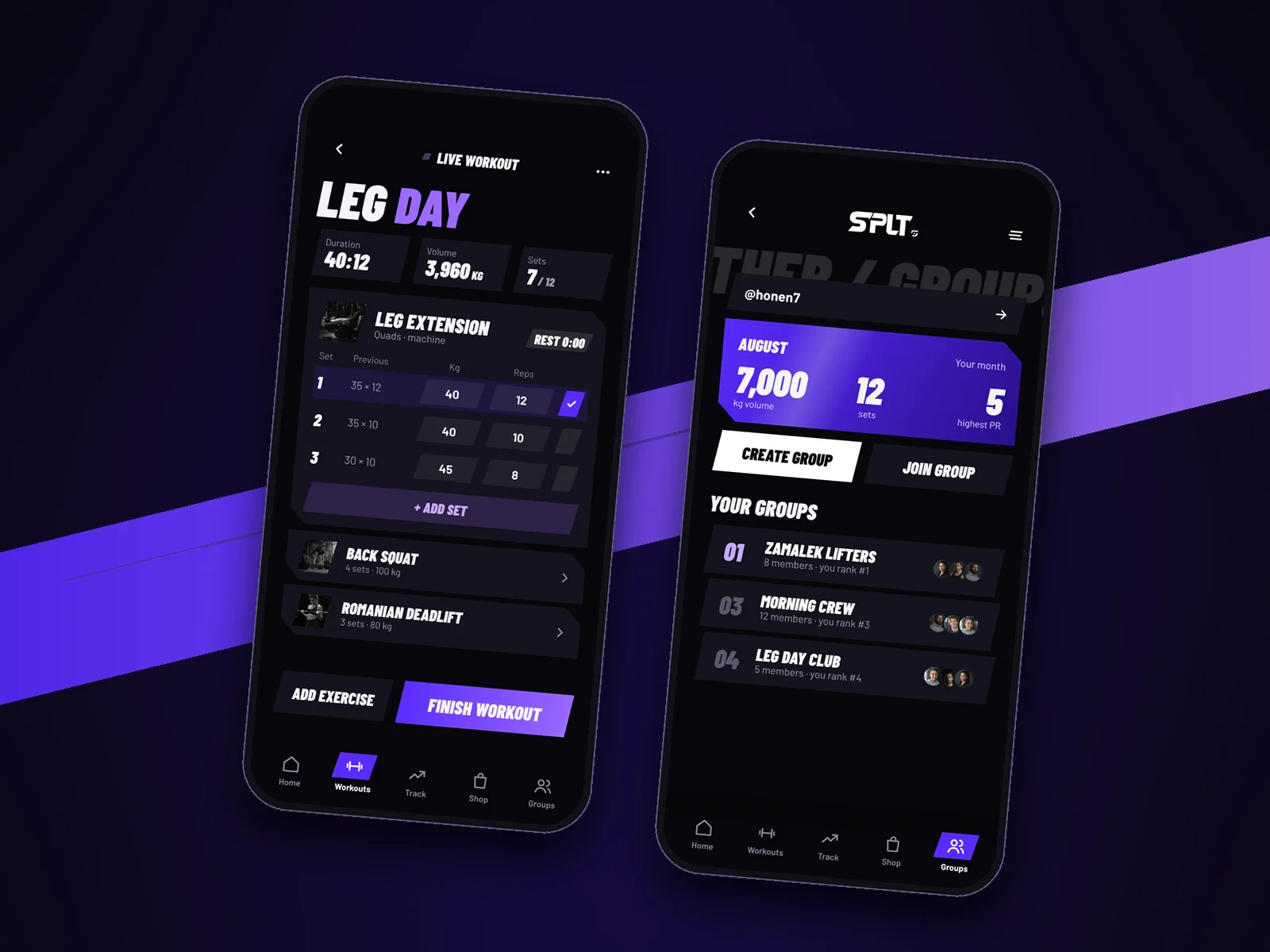
- Designed workout, progress, group, achievement and loyalty features for members
- Created one shared system for the mobile app and three dashboards
- Planned delivery in three phases. commerce, subscriptions and loyalty first; the trainer platform second; integrations and gamification third
- Fixed eight bugs in the existing app before new feature work began
Looking back
The brief asked for a shop. Competitive research showed that the trainer relationship could give the platform another reason to exist and another way to earn. The most valuable work was defining a product in which four different roles had a purpose, then designing a system a small team could deliver. The build continued after my involvement; I scoped and designed the first phases.
Creative Direction & UX Strategy: Amr Abu-Talleb · UI Design: Overpowered design team